Water purification in Phoenix is a word for systems that aim to take more out of the water than a simple filter: reverse osmosis, ultraviolet treatment, or several stages in a row. The word is used loosely, so the way to judge a purification system is by what it is certified to remove.
Water Treatment Phoenix is an independent referral service, not an installer, plumber or water utility. When you send the form, your details go to an independent local water treatment pro who can contact you and prepare a quote.
Three kinds of system
| System | What it does | Standard to ask for |
|---|---|---|
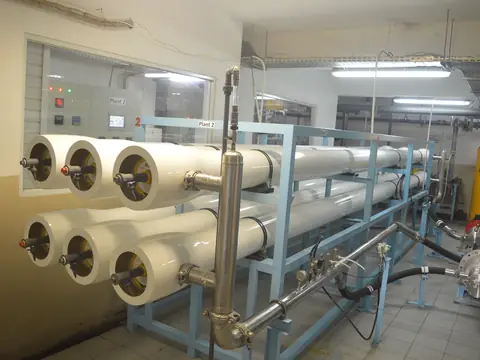
| Reverse osmosis | Pressure forces water through a semi-permeable membrane | NSF/ANSI 58 |
| Ultraviolet (UV) | Treats water with ultraviolet light | NSF/ANSI 55, Class A or Class B |
| Carbon and multi-stage filters | Filters chosen for taste, odor or named contaminants | NSF/ANSI 42, 53 or 401 |
EPA’s WaterSense program says reverse osmosis systems can potentially remove contaminants such as lead, volatile organic compounds, PFAS, arsenic, bacteria and viruses. A typical point-of-use RO system, EPA adds, generates five gallons or more of reject water per gallon treated; WaterSense labeled units send 2.3 gallons or less to the drain.
Start with your water
Decide first what contaminant you want to remove, then pick a unit certified to remove it. For City of Phoenix customers, the 2025 water quality report is the place to start: it lists, among much else, total dissolved solids of 464 to 716 ppm, against EPA’s non-mandatory guideline of 500 mg/L. The report also says taste, odor and hardness are not regulated under drinking water health standards.
If your home is on a private well, EPA advises testing it every year for total coliform bacteria, nitrates, total dissolved solids and pH, using a certified laboratory. UV and other treatment for a well should follow those results.


No health promises
This site makes no health claim for purified water and gives no verdict on anyone’s tap water. If you have a health question, ask your doctor, and read the contaminants your water provider reports. Purification is a choice about what you want in your drinking water, made with a test and a certification in hand.
Want a pro to test your water and suggest a system?
One tap or the whole house?
Purification can be fitted at one tap or for the whole house. Reverse osmosis is a point-of-use system by design, EPA explains: it is connected to a single fixture, such as the kitchen sink. UV systems can be fitted on a whole-house line, for example on a private well, where the test results call for it. A whole-house reverse osmosis system is a much bigger installation, and the installer sizes it after a water test.
Ask what each part of a quoted system does, where it goes and what it is certified to remove. A multi-stage system with five or seven stages is not better by count alone; each stage should have a job you can name.
Upkeep
Every purification system has parts that wear: prefilters, membranes, carbon stages, UV lamps. Each is changed on the schedule its maker sets, and a system past that schedule may not be doing what it was certified to do. Keep the schedule with the unit and note the change dates.
PFAS
EPA’s final rule set limits of 4.0 parts per trillion for PFOA and for PFOS. On May 18, 2026, EPA proposed keeping those limits with more time, to 2031, for water systems to comply, and rescinding limits for four other PFAS measures. Those were proposals when this page was written; EPA’s PFAS page has the current status. If PFAS is your reason for purification, ask for a system certified for PFAS reduction.
Questions for the quote
- What will this system remove, and what certification shows it?
- Is it for one tap or the whole house?
- How much water goes to the drain, and is it WaterSense labeled?
- What does the maker’s schedule say about filters, membranes or UV lamps?
Where the water goes
Reverse osmosis sends reject water to the drain, five gallons or more per gallon treated in a typical point-of-use unit, EPA says, and up to 10 in some inefficient ones. In the desert that is worth asking about. A WaterSense labeled RO system sends 2.3 gallons or less to the drain for each gallon it treats.
For more on RO, see reverse osmosis in Phoenix; for filters, see water filtration in Phoenix. To ask for a quote, send the form: your request goes to an independent water treatment pro in the Valley, who can contact you. Asking is free.
Questions people ask
Is purification the same as filtration?
Not exactly. The words are used loosely. Judge a system by what it is certified to remove.
Does a UV system soften water?
No. UV treats water with ultraviolet light; hardness needs a softener.

Ask a local pro