Reverse osmosis in Phoenix is a drinking water system, often fitted under the kitchen sink, that pushes water through a membrane to lower what is dissolved in it. With the City of Phoenix 2025 report listing total dissolved solids of 464 to 716 ppm, it is the system people look at when they want different drinking water at one tap.
Water Treatment Phoenix is an independent referral service, not an installer, plumber or water utility. When you send the form, your details go to an independent local water treatment pro who can contact you and prepare a quote.
How reverse osmosis works
EPA’s WaterSense program describes reverse osmosis as “the process by which pressure forces water through a semi-permeable membrane”. What passes through is the treated water, called permeate. What does not is the reject water, called concentrate or brine, which goes to the drain.
A point-of-use RO system is connected to a single fixture, such as the kitchen sink. EPA says RO systems can potentially remove contaminants such as lead, volatile organic compounds, PFAS, arsenic, bacteria and viruses. What a given system removes depends on the system, so check its certification.
Phoenix water and dissolved solids
Total dissolved solids is a measure of everything dissolved in the water. EPA’s secondary guideline for it is 500 mg/L, a non-mandatory guideline for taste and appearance that EPA does not enforce; at higher levels it lists hardness, deposits, colored water, staining and a salty taste. The City of Phoenix 2025 report gives 464 to 716 ppm, so parts of the range sit above that guideline.
Phoenix’s water comes mostly from the Salt, Verde and Colorado rivers, with about 2% from about 20 city wells in 2025. The city’s report also gives hardness of 10 to 17.6 grains per gallon. Those are city-wide figures for City of Phoenix customers. A pro can measure the dissolved solids at your own tap, before and after an RO system, so you can see the difference in numbers.
| Figure | City of Phoenix 2025 | Reference |
|---|---|---|
| Total dissolved solids | 464 to 716 ppm | EPA secondary guideline 500 mg/L |
| Total hardness | 172 to 302 ppm (10 to 17.6 gpg) | USGS: over 180 mg/L is very hard |
Reject water and WaterSense
Every RO system sends some water down the drain. EPA says a typical point-of-use RO system generates five gallons or more of reject water for every gallon of treated water, and some inefficient units generate up to 10. A WaterSense labeled system must send 2.3 gallons or less to the drain for each gallon it treats.
In a desert city that counts. Ask whether the system you are quoted is WaterSense labeled, and what its reject ratio is. Two systems that make the same water at the tap can use very different amounts doing it.


The standard to ask for
NSF/ANSI 58 is the standard for reverse osmosis drinking water treatment systems. The general advice is to select a unit certified to remove the contaminant you care about and to make sure the certification covers it. For RO, ask which contaminants the NSF/ANSI 58 certification lists for that model, and look it up yourself.
- Is the system certified to NSF/ANSI 58, and for which contaminants?
- Is it WaterSense labeled, and what is its reject ratio?
- Where does the faucet go, and where does the drain line connect?
- What does the maker’s schedule say about filter and membrane changes?
- Will it be measured before and after, so I can see the dissolved solids drop?
Want a reverse osmosis quote for your kitchen?
RO with a softener
Reverse osmosis treats the water at one tap. It does not soften the water for the house. If scale is your problem too, a water softener treats hardness for every tap, and RO at the kitchen sink can be added for drinking water. A salt-based softener adds sodium in exchange for the hardness it removes; If that matters to you, ask your doctor, and ask the pro what an RO system is certified to reduce and how the two fit together in your house.
Whole-house reverse osmosis
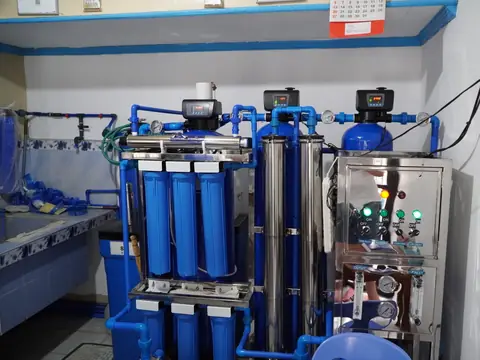
Some companies offer reverse osmosis for the whole house. That is a much bigger installation than an under-sink unit, and the installer sizes it after a water test. Ask what it involves and why it is needed rather than an under-sink unit plus a softener.
Drinking water and health
This site makes no health claim for RO water, filtered water or tap water. The City of Phoenix report says taste, odor and hardness are not regulated under drinking water health standards. If you have a health question about your water or your diet, ask your doctor, and read the city’s report on the contaminants it does regulate.
PFAS
EPA’s final rule set limits of 4.0 parts per trillion for PFOA and for PFOS in public water. On May 18, 2026, EPA proposed keeping those two limits, giving water systems until 2031 to comply, and rescinding limits for PFHxS, PFNA, HFPO-DA (GenX) and the mixture hazard index. Those were proposals when this page was written; EPA’s PFAS page has the current status. EPA’s WaterSense page lists PFAS among what RO can potentially remove; if that is why you want RO, ask for a system certified for PFAS reduction.
Upkeep
RO systems have prefilters, a membrane and often a final filter. Each is changed on the schedule the maker sets. Ask the pro to label the change dates, and keep the schedule with the unit. A dissolved solids reading at the RO tap, compared with the one taken at installation, is a simple way to see whether the system is still doing its job.
Reading the numbers
Dissolved solids are given in parts per million (ppm) or milligrams per liter (mg/L); the City of Phoenix report sets its ppm figures directly beside EPA’s mg/L guideline. The city’s 464 to 716 ppm is a range across its system in 2025. Your own tap may sit anywhere in it, and the reading that matters for you is the one taken in your kitchen. If the reading at your tap is already low, ask the pro why RO is still worth it for you; if it is high, the before and after readings show what the system changes.
Choosing between RO and a filter
If you only want a better taste, a carbon filter certified to NSF/ANSI 42 may do it. If you want to lower dissolved solids or a named contaminant at the drinking tap, RO is the system built for it. Water filtration in Phoenix compares the options, and water purification covers RO with ultraviolet treatment.
Where the system goes
An under-sink RO system needs room in the cabinet for its filters, the membrane and a storage tank, a connection to the cold water line, a place for its own faucet on the sink or counter, and a drain connection for the reject water. Some systems can also feed a refrigerator’s water line. Ask the installer to look in the cabinet before quoting, and to show you where each part will sit.
What affects the size of the job
This site prints no prices. These are the things that change what an RO installation involves:
- The number of stages and the filters before and after the membrane.
- A storage tank or a tankless design, and the space under your sink.
- The faucet: a new hole in the counter or sink, or an existing one.
- The drain connection for the reject water.
- Extra lines to a refrigerator or a second tap.
- Efficiency: a WaterSense labeled system, which sends 2.3 gallons or less to the drain per gallon treated.
Ask for each item on the quote so you can compare like with like.
Checking the result
The simplest check that RO is working is a dissolved solids reading at the RO faucet and at the main kitchen tap, side by side. Ask the installer to take both readings when the system is fitted and to write them down. If the reading at the RO tap creeps up later, ask the pro to check the filters and the membrane.
How to ask for a quote
Send the form and choose “Want drinking water (RO)”. Your request goes to an independent water treatment pro in the Valley, who can contact you, measure your water and prepare a quote. Asking is free, and you are never obliged to go ahead.
Questions people ask
Why buy a reverse osmosis system in Phoenix?
To lower dissolved solids and certain contaminants in drinking water at one tap. The City of Phoenix 2025 report lists dissolved solids of 464 to 716 ppm; EPA’s secondary guideline is 500 mg/L.
How much water does RO waste?
EPA says a typical point-of-use system sends five gallons or more down the drain per gallon treated. WaterSense labeled systems send 2.3 gallons or less.
Does RO soften water?
Only at the tap it serves. For hardness in the whole house, a softener is the system to look at.
Which standard covers RO systems?
NSF/ANSI 58, the standard for reverse osmosis drinking water treatment systems.

Ask a local pro